Latest Posts
- How players figure out instant games by watching them

- Questions to Ask Before Selecting Best Peptides on the Market

- Two Trials, One Drug, and the Number Nobody Should Be Chasing

- 5 Verified Compounded Medication Providers Actually Worth Your Money in 2026

- Semax for ADHD Focus: 30-Day Test

- Vograce: Where Imagination Meets Manufacturing Mastery

- 5 Common Mistakes People Make When Buying an Air Fryer Online

- The 10 Best AI Text to Video Generators of 2026

- How to Install a Water Filter

- Future of Crypto Laws

- Fear and Greed Index Explained

- Sustainable Technology for a Better Future

- Tech Innovations Driving Environmental Change

Globecave: Exploring the World of Caves and Global Underground Wonders
Introduction
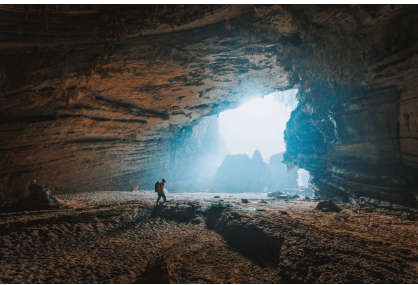
Caves have fascinated humans for thousands of years. From ancient shelters and sacred sites to modern adventure destinations, underground environments reveal unique geological formations, rare ecosystems, and evidence of human history. The term “globecave” can be understood as a conceptual keyword that represents the global exploration, study, and appreciation of caves across the planet.
In today’s digital age, travelers, researchers, and adventure enthusiasts increasingly search online for information about cave tourism, speleology (the scientific study of caves), underground landscapes, and geological formations. A concept like globecave captures the idea of discovering caves worldwide and learning about the natural processes that shape them.
This article explores the world of caves from a global perspective—covering cave formation, famous cave systems, cave ecosystems, responsible tourism, and the growing popularity of underground exploration.
Understanding the Concept of Globecave
The word globecave combines two ideas:
- Globe – representing the Earth and its diverse geographic regions
- Cave – natural underground spaces formed by geological processes
Together, the concept suggests a global network of caves and underground landscapes worth exploring, studying, and protecting.
Across continents, caves form in many different environments, including:
- limestone mountain ranges
- volcanic regions
- coastal cliffs
- desert landscapes
- glacier systems
Because caves occur worldwide, a “globecave” perspective emphasizes the global significance of underground environments.
How Caves Form: The Science Behind Underground Landscapes
Caves develop over long periods through several geological processes. Understanding these processes helps explain why caves appear in specific regions.
1. Solution Caves (Karst Caves)
The most common caves are solution caves, which form when slightly acidic water dissolves soluble rock such as limestone, gypsum, or dolomite.
Key features of karst caves include:
- stalactites
- stalagmites
- underground rivers
- large chambers
These formations develop slowly as minerals deposit over thousands of years.
2. Lava Tube Caves
Lava tubes form during volcanic eruptions. When molten lava flows downhill, the outer surface cools and hardens while liquid lava continues flowing inside.
Once the lava drains away, it leaves a hollow tube-like cave.
Examples of lava tube caves can be found in:
- Hawaii
- Iceland
- the Canary Islands
- parts of the western United States
These caves often contain smooth walls and long tunnels.
3. Sea Caves
Sea caves are carved by wave action along coastal cliffs.
Over time, waves erode weaker rock layers, creating cavities that expand into caves.
Famous sea caves exist in:
- Scotland
- Portugal
- New Zealand
- California
Many are accessible by boat or kayak.
4. Glacier Caves
Glacier caves form within or beneath ice glaciers when melting water creates tunnels through ice.
These caves change constantly because glaciers move and melt. As a result, glacier caves are temporary but visually spectacular.
They are commonly found in:
- Iceland
- Alaska
- the Alps
Famous Cave Systems Around the World
Exploring caves globally highlights how diverse underground landscapes can be.
Mammoth Cave – United States
Mammoth Cave in Kentucky is the longest known cave system in the world, with more than 400 miles (640 km) of mapped passages.
Key highlights include:
- vast limestone chambers
- underground rivers
- historical mining areas
It is also designated as a UNESCO World Heritage Site.
Son Doong Cave – Vietnam
Located in Phong Nha-Ke Bang National Park, Son Doong Cave is the largest known cave chamber on Earth by volume.
Its massive size allows:
- clouds to form inside the cave
- a jungle ecosystem to grow within the cavern
- unique limestone formations to develop
Discovered in 1991 and explored in 2009, it has become one of the most famous cave destinations globally.
Waitomo Glowworm Caves – New Zealand
These caves are known for a remarkable natural display created by bioluminescent glowworms.
Visitors travel through underground rivers where thousands of tiny lights illuminate the cave ceiling.
This phenomenon attracts travelers interested in both geology and rare ecosystems.
Eisriesenwelt Ice Cave – Austria
Eisriesenwelt is the largest ice cave in the world, extending over 40 kilometers.
Inside, visitors encounter:
- massive ice formations
- frozen chambers
- seasonal ice sculptures created by airflow and temperature changes.
Cave Ecosystems and Unique Wildlife
Caves host some of the most specialized ecosystems on Earth. Organisms living in caves are known as troglobites, meaning they are adapted specifically to underground environments.
Common cave wildlife includes:
- bats
- cave fish
- insects and spiders
- crustaceans
- microorganisms
Many cave animals have evolved unique characteristics, such as:
- reduced or absent eyesight
- enhanced sensory organs
- pale or translucent skin
Because caves are isolated ecosystems, many species found there exist nowhere else on Earth.
The Role of Caves in Human History
Caves have played an important role in human civilization for thousands of years.
Ancient Shelter
Early humans used caves for protection from weather and predators. Archaeological sites show evidence of prehistoric habitation in caves across Africa, Europe, and Asia.
Prehistoric Art
Some caves contain ancient artwork dating back tens of thousands of years.
Examples include:
- Lascaux Cave in France
- Altamira Cave in Spain
- Chauvet Cave in France
These paintings provide valuable insights into early human culture.
Religious and Cultural Sites
Many cultures considered caves sacred spaces.
They have been used as:
- meditation chambers
- burial sites
- temples and shrines
Examples include Buddhist cave temples in India and China.
Cave Tourism and Adventure Travel
In recent years, cave tourism has become a popular form of adventure travel.
Visitors explore caves through activities such as:
- guided cave tours
- spelunking
- underground photography
- scientific expeditions
Countries with strong cave tourism industries include:
- Vietnam
- Slovenia
- Mexico
- Australia
- the United States
Cave tourism helps promote geological education and conservation awareness.
Responsible Cave Exploration
Because caves are fragile environments, responsible exploration is essential.
Important Guidelines
Visitors should follow these practices:
- never touch delicate formations like stalactites
- stay on designated pathways
- avoid disturbing wildlife, especially bats
- follow local safety regulations
- travel with experienced guides when necessary
Even minor damage can take thousands of years to repair naturally.
Technology and Modern Cave Exploration
Modern technology has greatly improved our ability to study and explore caves.
Tools used by speleologists include:
- 3D cave mapping technology
- laser scanning
- ground-penetrating radar
- GPS-based mapping systems
- underwater cave diving equipment
These tools help scientists understand underground landscapes more accurately.
The Global Importance of Caves
Caves are important not only for exploration but also for environmental science.
They provide valuable information about:
- climate history through mineral deposits
- groundwater systems
- geological changes over time
- biodiversity evolution
Some cave formations, such as stalagmites, can record climate patterns from thousands of years ago, helping scientists understand past environmental conditions.
The Future of Global Cave Exploration
Interest in caves continues to grow as researchers discover new underground systems.
Advances in mapping and exploration are revealing:
- previously unknown cave networks
- deeper underwater cave passages
- new cave species
As global awareness increases, the concept of globecave exploration encourages people to appreciate the hidden landscapes beneath our feet.
Conclusion
The idea of globecave represents the global fascination with caves and underground environments. From massive cave chambers in Vietnam to glowworm-lit caverns in New Zealand, caves showcase the extraordinary diversity of Earth’s geological processes.
Beyond their natural beauty, caves hold important clues about climate history, biodiversity, and human civilization. Responsible exploration and conservation efforts ensure that these fragile environments remain protected for future generations.
As interest in adventure travel and geological research grows, caves will continue to inspire scientists, explorers, and travelers around the world.